All Exhibit Items
45 items
- Description:
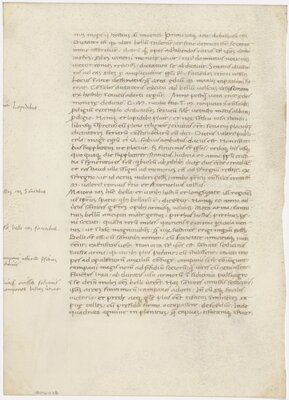
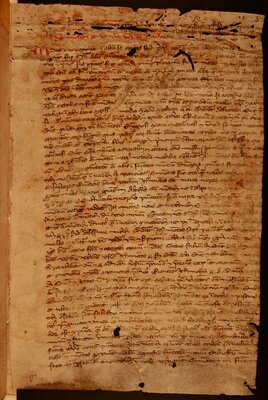
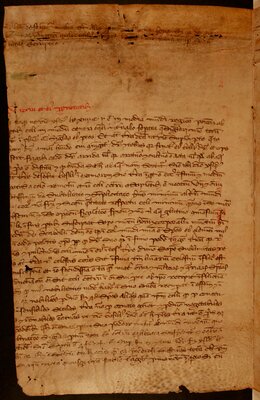
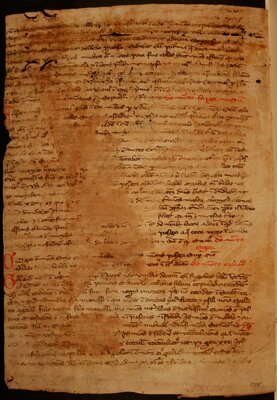
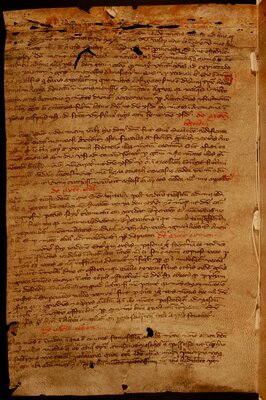
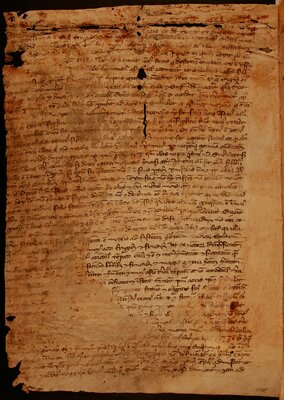
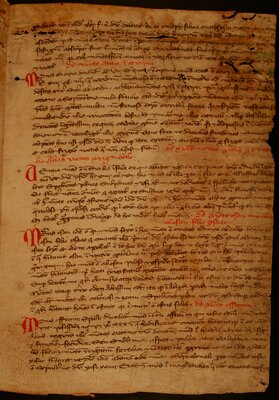
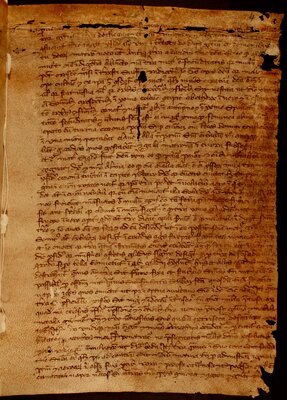
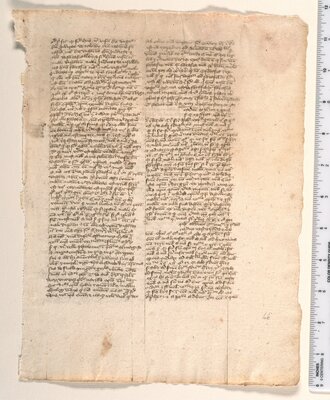
- Script: handwritten in Caroline minuscule. Produced in Italy during the 15th century.
- Date:
- ca. 1436?
- Description:
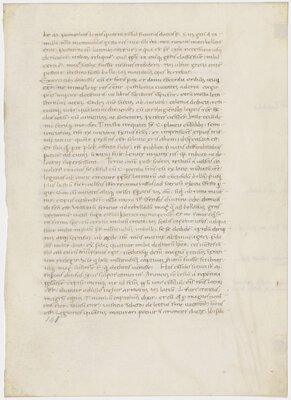
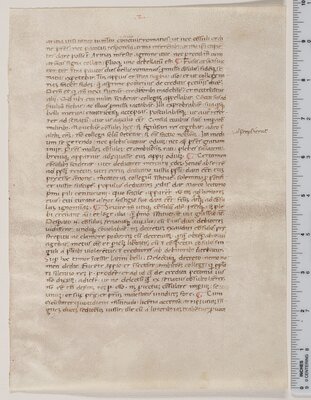
- Script: handwritten in Caroline minuscule. Produced in Italy during the 15th century.
- Date:
- ca. 1436?
- Description:
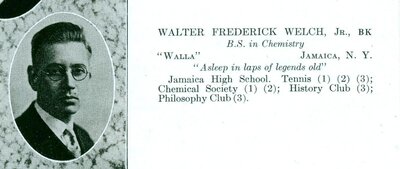
- Yearbook photograph of Walter Frederick Welch, Jr., Class of 1928, donor of rare books to Tufts University.
- Date:
- 1928
- Description:
- Photograph of Otto F. Ege, art historian, book collector, and dealer known for selling leaves of Medieval manuscripts and early printed books to libraries, museums, and private collectors.
- Description:
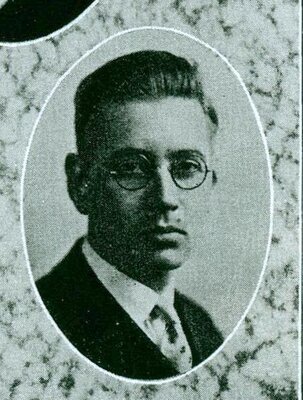
- Yearbook photograph of Walter Frederick Welch, Jr., Class of 1928, donor of rare books to Tufts University.
- Attribution:
- Tufts University
- Date:
- 1928
- Description:
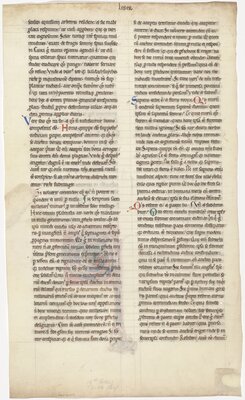
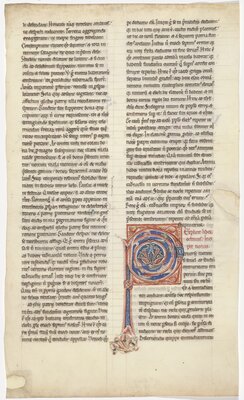
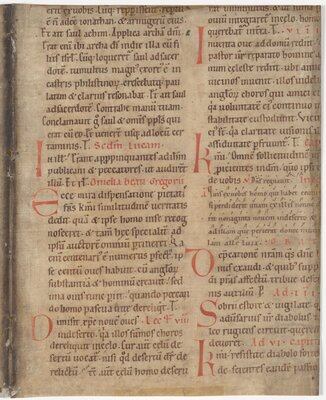
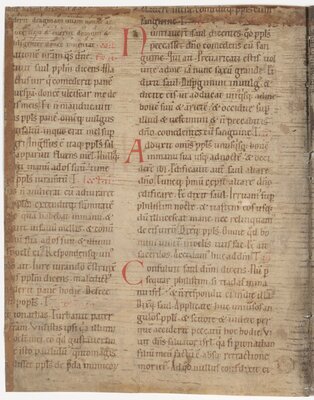
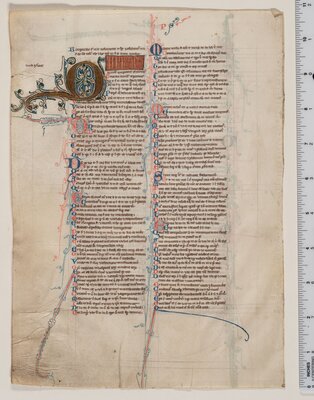
- This leaf from Gregory the Great's Moralia in Job was transcribed by hand in the second half of the Twelfth Century. The leaf contains the conclusion of the eighth book of Moralia and the beginning of the ninth book, which is highlighted by the large illuminated 'P'. Each chapter of Book 9 is demarcated by a small initial colored in red, green or blue.
- Date:
- 13th Century
- Description:
- This leaf from Gregory the Great's Moralia in Job was transcribed by hand in the second half of the Twelfth Century. The leaf contains the conclusion of the eighth book of Moralia and the beginning of the ninth book, which is highlighted by the large illuminated "P". Each chapter of Book 9 is demarcated by a small initial colored in red, green or blue.
- Date:
- 13th Century
- Description:
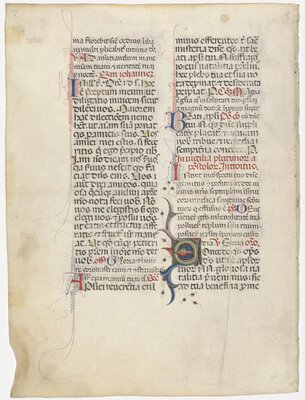
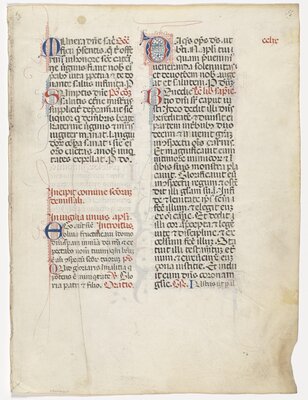
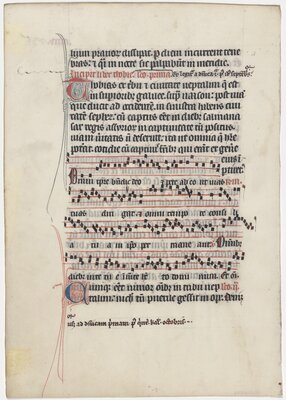
- The Missal is the Mass-book from which the services were read. This leaf shows an interesting arrangement of text with musical notations. It is written on vellum in liturgical black letter, decorated with a large flourished multicolor initial, along with several red and blue colored pen work initials.
- Date:
- 15th Century
- Description:
- The Missal is the Mass-book from which the services were read. This leaf shows an interesting arrangement of text with musical notations. It is written on vellum in liturgical black letter, decorated with a large flourished multicolor initial, along with several red and blue colored pen work initials.
- Date:
- 15th Century
- Description:
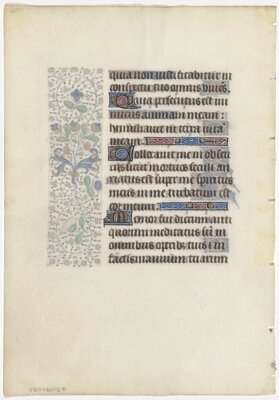
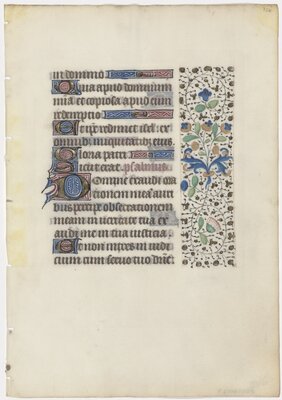
- Recto contains 15 handwritten short-lines in brown and red ink on vellum; illuminated initials and a large hand-drawn floral motif in the right margin. Verso contains 15 handwritten short-lines in brown and red ink with illuminated initials.
Script: Gothic Miniscule.
Hand-drawn floral motif in blue, green and red ink with heavy gold illumination; several illuminated letters on red and blue ink ground throughout.
- Date:
- 15th Century
- Description:
- Recto contains 15 handwritten short-lines in brown and red ink on vellum; illuminated initials and a large hand-drawn floral motif in the right margin. Verso contains 15 handwritten short-lines in brown and red ink with illuminated initials.
Script: Gothic Miniscule.
Hand-drawn floral motif in blue, green and red ink with heavy gold illumination; several illuminated letters on red and blue ink ground throughout.
- Date:
- 15th Century
- Description:
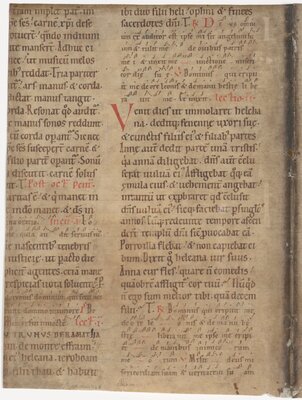
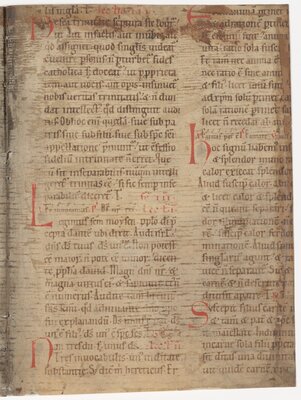
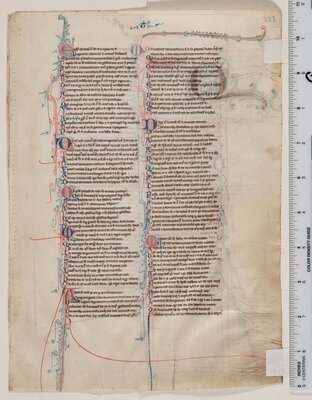
- A bifolio fragment of a 12th Century missal. Images are of each leaf, recto and verso. It is notable for its use of red ink decorated initials. Contains musical notation.
Layout: handwritten in 2 columns of 30 medium lines; musical notation throughout. It has been cut along all four borders.
Script: Transitional Gothic.
Origin: Produced in Europe probably during the 12th century.
- Date:
- 12th Century
- Description:
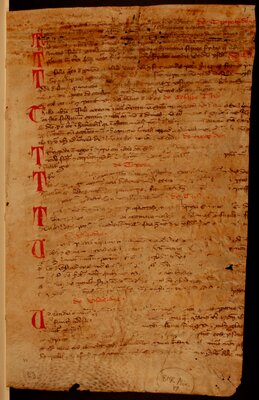
- Layout: written in 10 long lines; frame-ruled; followed by music notation and then 3 long lines of text.
Decoration: 1 medium red ink "T" on a silver illuminated ground; 1 medium blue ink "c" on a red ink illuminated ground on reverse. Red and black ink on obverse.
- Description:
- Layout: written in 10 long lines; frame-ruled; followed by music notation and then 3 long lines of text.
Decoration: 1 medium red ink "T" on a silver illuminated ground; 1 medium blue ink "c" on a red ink illuminated ground on reverse. Red and black ink on obverse.
- Description:
- A bifolio fragment of a 12th Century missal. Images are of each leaf, recto and verso. It is notable for its use of red ink decorated initials. Contains musical notation.
Layout: handwritten in 2 columns of 30 medium lines; musical notation throughout. It has been cut along all four borders.
Script: Transitional Gothic.
Origin: Produced in Europe probably during the 12th century.
- Date:
- 12th Century
- Description:
- A bifolio fragment of a 12th Century missal. Images are of each leaf, recto and verso. It is notable for its use of red ink decorated initials. Contains musical notation.
Layout: handwritten in 2 columns of 30 medium lines; musical notation throughout. It has been cut along all four borders.
Script: Transitional Gothic.
Origin: Produced in Europe probably during the 12th century.
- Date:
- 12th Century
- Description:
- A bifolio fragment of a 12th Century missal. Images are of each leaf, recto and verso. It is notable for its use of red ink decorated initials. Contains musical notation.
Layout: handwritten in 2 columns of 30 medium lines; musical notation throughout. It has been cut along all four borders.
Script: Transitional Gothic.
Origin: Produced in Europe probably during the 12th century.
- Date:
- 12th Century
- Description:
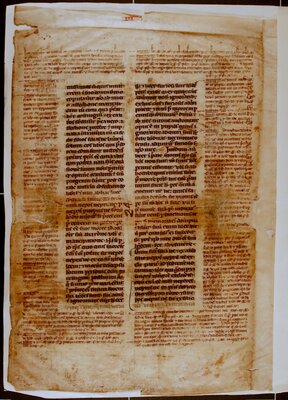
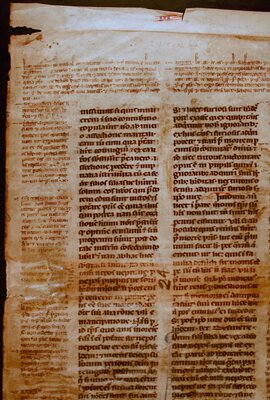
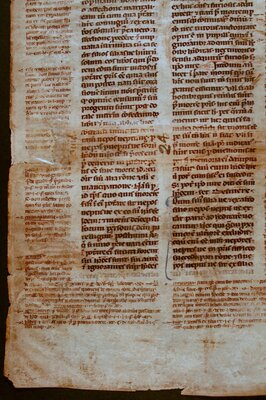
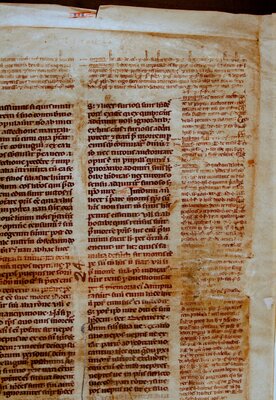
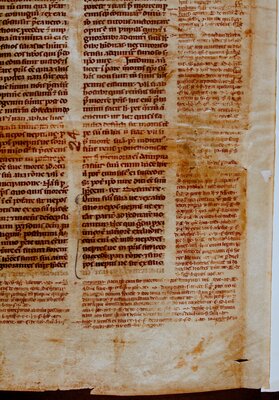
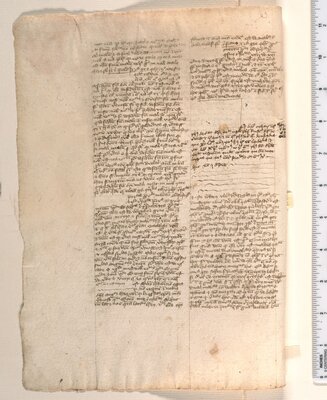
- A single leaf from a Justinian text, on parchment, recovered from a book binding. Late 13th century. 255 x 195 mm, 38 lines of text with up to 70 lines of gloss, paragraph marks in red and blue, early marginalia at right angles to the text. From the Institutes, Book III, Tit. I.
- Date:
- 13th Century
- Description:
- A single leaf from a Justinian text, on parchment, recovered from a book binding. Late 13th century. 255 x 195 mm, 38 lines of text with up to 70 lines of gloss, paragraph marks in red and blue, early marginalia at right angles to the text. From the Institutes, Book III, Tit. I.
- Date:
- 13th Century
- Description:
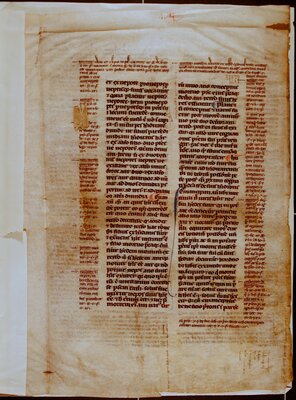
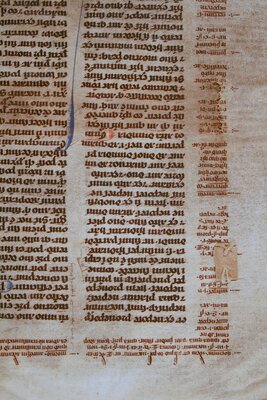
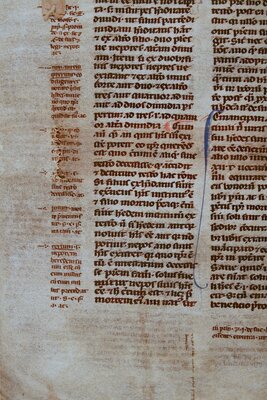
- A single leaf from a Justinian text, on parchment, recovered from a book binding. 357 x 242 mm, 50 lines of text with up to 88 lines of gloss, initials and paragraph marks in red and occasionally blue, some interlinear marginalia.
- Date:
- 13th Century
- Description:
- A single leaf from a Justinian text, on parchment, recovered from a book binding. 357 x 242 mm, 50 lines of text with up to 88 lines of gloss, initials and paragraph marks in red and occasionally blue, some interlinear marginalia.
- Date:
- 13th Century
- Description:
- Two bifolios of an unidentified geographical manuscript, attributed to Italy in the 14th Century. Text, comprising 39 lines, on parchment, with rubrication.
- Date:
- 14th Century
- Description:
- Two bifolios of an unidentified geographical manuscript, attributed to Italy in the 14th Century. Text, comprising 39 lines, on parchment, with rubrication.
- Date:
- 14th Century
- Description:
- Two bifolios of an unidentified geographical manuscript, attributed to Italy in the 14th Century. Text, comprising 39 lines, on parchment, with rubrication.
- Date:
- 14th Century
- Description:
- A leaf from a 14th Century manuscript of Aristotle's "Nicomachean Ethics", collected in a portfolio of manuscript and printed book leaves assembled by Otto F. Ege.
- Date:
- 14th Century
- Description:
- Two bifolios of an unidentified geographical manuscript, attributed to Italy in the 14th Century. Text, comprising 39 lines, on parchment, with rubrication.
- Date:
- 14th Century
- Description:
- Two bifolios of an unidentified geographical manuscript, attributed to Italy in the 14th Century. Text, comprising 39 lines, on parchment, with rubrication.
- Date:
- 14th Century
- Description:
- Two bifolios of an unidentified geographical manuscript, attributed to Italy in the 14th Century. Text, comprising 39 lines, on parchment, with rubrication.
- Date:
- 14th Century
- Description:
- Two bifolios of an unidentified geographical manuscript, attributed to Italy in the 14th Century. Text, comprising 39 lines, on parchment, with rubrication.
- Date:
- 14th Century
- Description:
- Two bifolios of an unidentified geographical manuscript, attributed to Italy in the 14th Century. Text, comprising 39 lines, on parchment, with rubrication.
- Date:
- 14th Century
- Description:
- A leaf from a 15th Century manuscript of Livy's "History of Rome", collected in a portfolio of manuscript and printed book leaves assembled by Otto F. Ege.
- Date:
- 15th Century
- Description:
- A leaf from a 15th Century manuscript of Livy's "History of Rome", collected in a portfolio of manuscript and printed book leaves assembled by Otto F. Ege.
- Date:
- 15th Century
- Description:
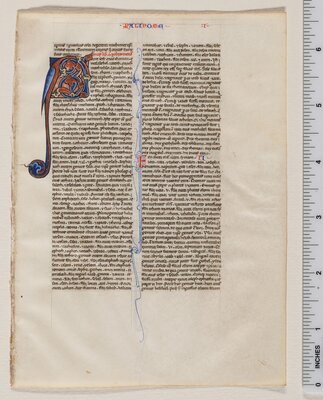
- A leaf from the Cambridge Bible, early 13th Century, collected in a portfolio of manuscript and printed book leaves assembled by Otto F. Ege.
- Date:
- 13th Century
- Description:
- A leaf from a 14th Century manuscript of Aristotle's "Nicomachean Ethics", collected in a portfolio of manuscript and printed book leaves assembled by Otto F. Ege.
- Date:
- 14th Century
- Description:
- A leaf from the Cambridge Bible, early 13th Century, collected in a portfolio of manuscript and printed book leaves assembled by Otto F. Ege.
- Date:
- 13th Century
- Description:
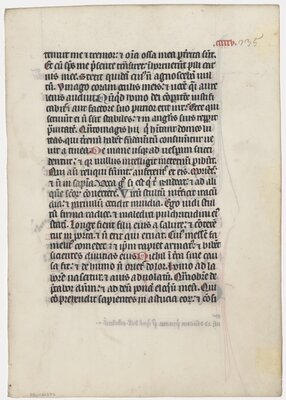
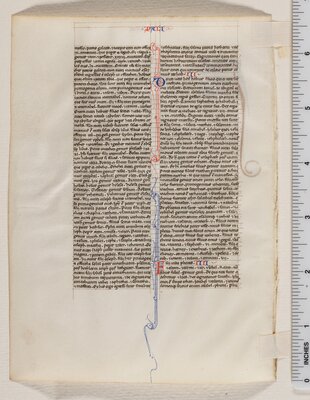
- A leaf from a Vulgate Bible, circa 1240, collected in a portfolio of manuscript and printed book leaves assembled by Otto F. Ege.
- Date:
- 13th Century
- Description:
- A leaf from a Vulgate Bible, circa 1240, collected in a portfolio of manuscript and printed book leaves assembled by Otto F. Ege.
- Date:
- 13th Century